
- By admin-theme
- Uncategorized
- 0 Comment
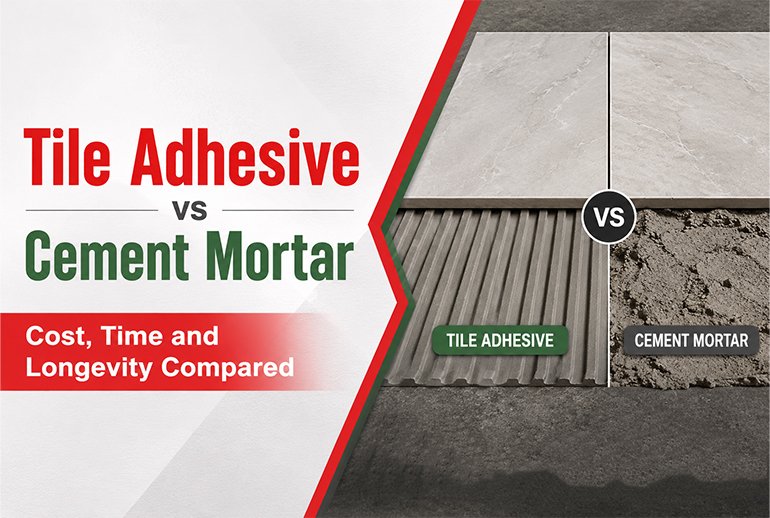
Tile Adhesive vs Cement Mortar: Cost, Time and Longevity Compared
The use of tile adhesive or the traditional cement mortar during the installation of tiles may have a direct influence on the durability and finish of the surface. The two materials are commonly used in India, only that they operate in a very different manner. Knowing their cost, performance, and their long-term benefits may enable homeowners, contractors and builders make a better choice.
1. Cost Comparison
Usually cement mortar is less expensive in the short run. It is prepared by combining cement, sand and water thereby rendering it readily accessible on the working sites. It may however be costly in terms of thicker application layers, longer curing time and additional labour. These extra measures make the cost of installation more expensive.
On the contrary, tile adhesive is more expensive per bag, although it is less efficient in terms of wastage. The tile glue adhesive that is available today in India is intended to be used in thin layers hence consumption of less material. In the case of large scale projects, this can make the cost of tile adhesive in India remarkably similar to mortar taking into consideration the overall labour and time of application saved.
2. Efficiency of Time and Applications
Cement mortar is more difficult to prepare, apply and cure. Laid tiles on the mortar cannot be put into use within 24-48 hours, and even then, the surface could take time before it is allowed to carry its full load or water exposure.
Cement tiles provide a quicker process. It is easily mixed with water, easy to use, spread and even sets. It also enables high precision in laying the tiles and therefore it is a favorite among professional tile adhesive brands in India. Reduced curing period minimizes the time delays in projects particularly commercial locations and high traffic.
3. Longevity and Performance
In longevity, tile adhesive is where it is obvious. Cement mortar may contract and crack or lose strength with time particularly in the wet areas or on heavy tiles. This results in hollow sounds, loose tiles or detachment.
The tile adhesive is designed on the basis of a strong bonding, elasticity and resistance to water. This is why it can be used in the current application like swimming pool adhesive in India, exterior cladding, and high-load floors. Such specialised products as underwater swimming pool tile adhesive in India or underwater pool tile adhesive in India are guaranteed to remain stable even in a completely submerged environment. Due to these properties, the tile adhesive manufacturers in India recommend it in large-format tiles, vitrified tiles and natural stones.
4. Best Uses for Each Material
- Cement Mortar: Cement Mortar can be applied in simple brick work or in projects within a limited budget where the accuracy is not a major concern.
- Tile Adhesive: Applicable in floors, walls, exterior, wet surfaces, pools as well as in stone veneering. Wall putty manufacturers in India and exterior wall cladding tiles suppliers in India also use it on a large scale to make sure that the surface bonding is better.
Conclusion
Although cement mortar is a simple and cost-effective solution, tile adhesive has a better bond strength, can be installed in a shorter amount of time, and has increased longevity. Rock Build is a leading provider of tile material solutions that is in line with the trend of the industry to orient to stronger and long-lasting construction solutions and is aligned with the rising demand of the best tile adhesive company in India and tile adhesive supplier in India.