
- By admin-theme
- Uncategorized
- 0 Comment
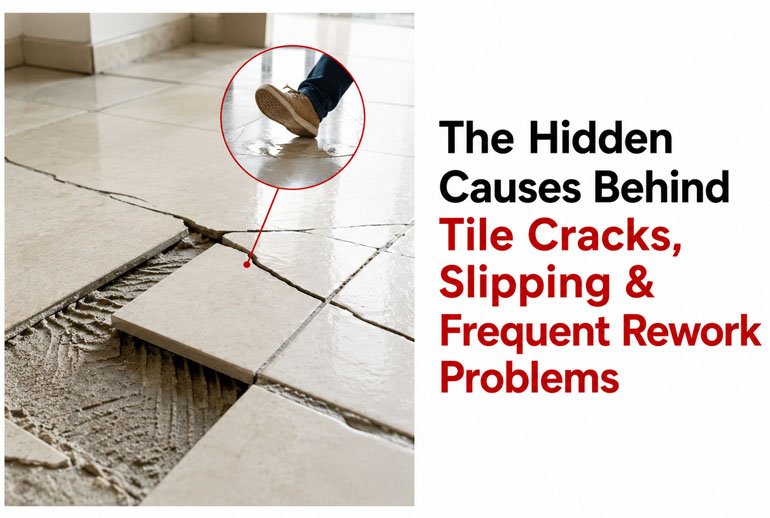
The Hidden Causes Behind Tile Cracks, Slipping & Frequent Rework Problems
Tiles are widely used in the construction industry as flooring and wall materials. They enhance beauty, prolong life, and are easy to care for. But many buildings suffer from common problems such as tile cracks, tile slippage, tile debonding, and frequent repairs. They are not only maintenance issues but also safety concerns that affect the surface’s overall life.
What causes cracks in tiles?
Improper installation is probably one of the most common causes of tile cracking. If the surface under the tile is not level or not adequately prepared for the tile, stress will build over time and result in the tile cracking. The other one is structural movement. All buildings expand and contract with temperature changes, and if there are no movement joints in the building, cracks may develop.
Other factors, such as heavy loads and impact, can also cause cracks in tiles, particularly in commercial areas, corridors and busy eating zones.
Tile Slippage
Some people think that slippery tiles are only due to the tile finish. In fact, the slipping is frequently due to poor installation and inadequate bonding. Tiles that are not securely installed can shift slightly over time, causing uneven surfaces that can pose a risk of slips and trips.
Another significant factor is water. Research indicates that wet floors can be a major problem in both residential and office buildings, particularly when it comes to accidents. These can be minimised with proper drainage and the selection of anti-slip surfaces.
Tile Debonding Problems
Debonding of tiles is when tiles have lost adhesion and pulled away from the substrate. This often only becomes apparent when the sound of holes, loose tiles, or movement occurs.
Common causes include:
- Poor surface preparation
- Incorrect adhesive application
- The other type of air pockets is found under the tiles.
- Moisture penetration
- Lack of expansion joints
If left untreated, debonded tiles can cause extensive damage and costly replacement.
Why Does Frequent Rework Happens?
Re-working is typically not due to the tile itself, but to incorrect installation. In many projects, contractors have to rush to install the project to meet deadlines. If the curing time is insufficient, the wrong type of adhesive is used, or workmanship is poor, failures may recur.
Industry literature has shown that rework can be a significant part of project costs. It is much more cost-effective to prevent a tile crack, slip, or debonding at the outset than to deal with the issues over and over again.
Steps to Avoid Tile Failures
For the sake of long-term issues, builders and property owners should focus on proper installation practices. Surface preparation, quality adhesives, proper spacing, and expansion joints are important considerations for tile performance. Regular inspections can also detect early signs of cracked or debonded tiles, helping prevent extensive damage.
Conclusion
With proper tile materials and installation techniques, most tile failures can be avoided. When tile cracking, tile slipping, tile debonding, and rework are constant, property owners should be aware of the causes and make informed decisions to help extend the life of tiled surfaces.
Rock Build takes special pride in industry-leading installation techniques, designed to minimise common tile problems and enhance long-lasting performance where quality workmanship and reliable construction practices are paramount.
FAQs
1. What causes tile cracks after installation?
Tile cracks usually occur due to structural movement, uneven subfloors, heavy loads, poor installation practices, or lack of expansion joints. Identifying the root cause is important before carrying out repairs.
2. Why do tiles become slippery over time?
Tiles can become slippery because of water accumulation, surface wear, cleaning residues, or uneven installation. Regular maintenance and proper drainage help reduce the risk of slipping.
3. What is tile debonding?
Tile debonding is the separation of tiles from the surface beneath them. It often results from poor adhesive bonding, moisture issues, or inadequate surface preparation during installation.
4. How can frequent tile rework be avoided?
Frequent rework can be minimised by using high-quality materials, preparing the substrate correctly, allowing adequate curing time, and following the recommended installation guidelines.
5. Are cracked tiles always a structural problem?
No. While structural movement can cause tile cracks, many cases are linked to installation defects, impact damage, poor bonding, or inadequate expansion space.