
- By admin-theme
- Uncategorized
- 0 Comment
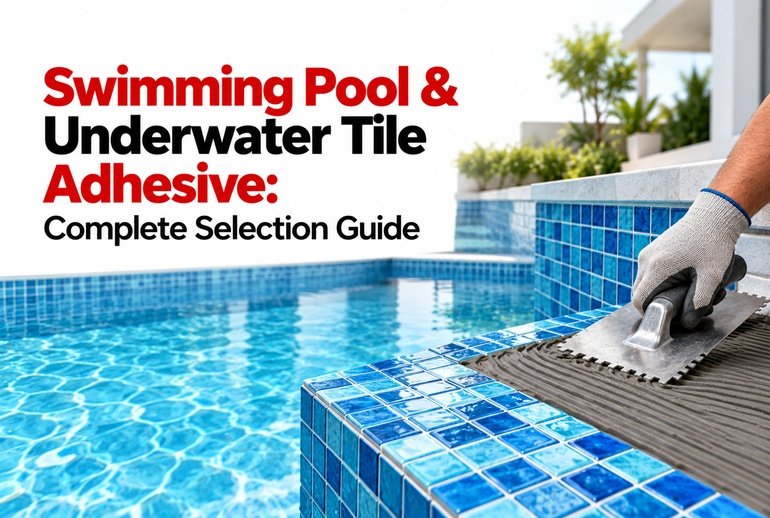
Swimming Pool & Underwater Tile Adhesive: Complete Selection Guide
Choosing the right swimming pool & underwater tile adhesive is essential for creating a durable, safe and long-lasting tiled surface. Unlike ordinary floors or walls, swimming pools remain exposed to water, pressure, cleaning chemicals and temperature changes for extended periods. Using an unsuitable adhesive can result in loose tiles, cracks, hollow spots and expensive repairs.
Whether you are constructing a residential pool, renovating an existing pool, or working on a fountain, spa or water feature, the adhesive should be selected according to the tile type, substrate, water exposure and installation conditions. Rock Build provides specialised tile adhesive solutions designed for demanding applications, including swimming pools and exterior surfaces.
Why Swimming Pool Tile Adhesive Needs Special Attention
A swimming pool is a permanently wet environment. The adhesive remains exposed to water after installation, while chlorine and other chemicals can add further stress to the bonding system. Temperature variations and movement in the substrate can also affect tile adhesion.
A suitable pool adhesive should therefore offer:
- Strong and durable tile bonding
- Resistance to continuous water exposure
- Good flexibility to accommodate minor movement
- Resistance to commonly used pool chemicals
- Adequate slip resistance for vertical tile installation
- Compatibility with the selected tile and substrate
Regular tile adhesive intended for dry indoor areas should not automatically be considered suitable for submerged applications.
How to Choose the Right Underwater Tile Adhesive
Selecting an underwater tile adhesive involves more than simply looking for the strongest product. Consider these factors before making a decision.
1. Consider Water and Chemical Exposure
The first question is whether the tiles will remain continuously submerged. Pool adhesives should be designed and tested for wet or submerged conditions. The formulation should also withstand the chemicals used during routine pool maintenance.
2. Match the Adhesive With the Tile
Different tiles have different bonding requirements. Ceramic, porcelain, vitrified and glass mosaic tiles may require different adhesive characteristics depending on their porosity, size and installation surface.
For example, glass mosaic generally requires excellent adhesion and careful installation because of its small size and relatively low absorption.
3. Check the Substrate
The condition of the pool surface is equally important. Concrete or plaster substrates should be sound, clean, properly prepared and free from loose material before adhesive application.
An adhesive cannot compensate for a weak or poorly prepared substrate. Surface preparation is therefore an important part of achieving a reliable bond.
4. Look for Flexibility and Strong Bond Strength
Pool structures can experience minor movement because of temperature variations and other stresses. A flexible adhesive can help accommodate such movement while maintaining the bond between the tile and substrate.
5. Consider Vertical Tile Installation
Waterline and wall tiles can slip before the adhesive sets. A suitable non-slip or sag-resistant formulation can make installation easier and help maintain proper tile alignment. Pool installation guidance also emphasises achieving solid bedding without voids beneath tiles.
Rock Build for Swimming Pool & Underwater Applications
Rock Build Diamond is a polymer-modified cement-based adhesive developed for demanding exterior and swimming pool applications. According to Rock Build’s product information, it is categorised as Type 2/C2 T and is designed for ceramic and vitrified tiles on elevations, façades and swimming pools. It offers a 2–10 mm application range and reduced tile slip.
Its stated advantages include:
- Polymer-based formulation
- Strong bonding
- Flexible application
- Reduced tile slippage
- Water-resistant performance
- Suitable for exterior and swimming pool applications
- Single-component formulation requiring addition of water
The exact adhesive selection should still be based on the project’s tile, substrate and exposure conditions.
Common Mistakes to Avoid
Even a good adhesive can fail when installation conditions are ignored. Avoid these common mistakes:
- Using an ordinary indoor adhesive: A product suitable for bedrooms or standard walls may not be designed for continuous immersion.
- Ignoring surface preparation: Dust, weak plaster or contaminants can compromise adhesion.
- Leaving voids beneath tiles: Inadequate adhesive coverage can create weak points.
- Choosing only by price: A cheaper product may increase long-term repair and replacement costs.
- Ignoring grout compatibility: Adhesive, grout, waterproofing and sealant should be considered as a complete system.
Swimming Pool Tile Adhesive Selection Checklist
Factor | What to Check |
Water exposure | Suitable for wet/submerged applications |
Tile type | Compatible with ceramic, porcelain, mosaic or stone |
Substrate | Concrete, plaster or other approved surface |
Bond strength | Adequate for the tile and application |
Flexibility | Able to accommodate minor movement |
Slip resistance | Important for vertical pool tiles |
Chemical resistance | Suitable for the pool’s maintenance conditions |
Application | Follow the manufacturer’s technical instructions |
Conclusion
The right swimming pool & underwater tile adhesive plays an important role in maintaining tile stability and reducing premature failures. Water exposure, chemicals, tile characteristics, substrate condition and movement should all be considered before selecting an adhesive.
Rock Build offers specialised solutions for demanding tiling applications, including swimming pools and exterior surfaces. For your next pool construction or renovation project, choose the adhesive according to the technical requirements rather than relying on a general-purpose product.
Planning a swimming pool tiling project? Contact Rock Build to discuss the appropriate tile adhesive solution for your application.
Frequently Asked Questions
1. Can regular tile adhesive be used for swimming pools?
Not necessarily. Swimming pools require adhesives specifically suitable for wet or submerged conditions. Always check the manufacturer’s recommended applications before installation.
2. What is underwater tile adhesive?
Underwater tile adhesive is formulated for applications where tiles remain exposed to continuous water or submerged conditions, such as swimming pools, fountains and water features.
3. Which factors affect swimming pool adhesive selection?
Tile type, tile size, substrate, water exposure, chemical conditions, temperature variations and whether the tiles are installed horizontally or vertically all influence selection.
4. Is surface preparation important before applying pool adhesive?
Yes. The substrate should be sound, clean and properly prepared. Poor surface preparation can reduce bonding performance even when the adhesive is appropriate.
5. Can Rock Build adhesive be used for swimming pools?
Rock Build Diamond is specifically listed by Rock Build for swimming pool and exterior applications, with polymer-modified formulation and reduced-slip characteristics.