
- By admin-theme
- Uncategorized
- 0 Comment
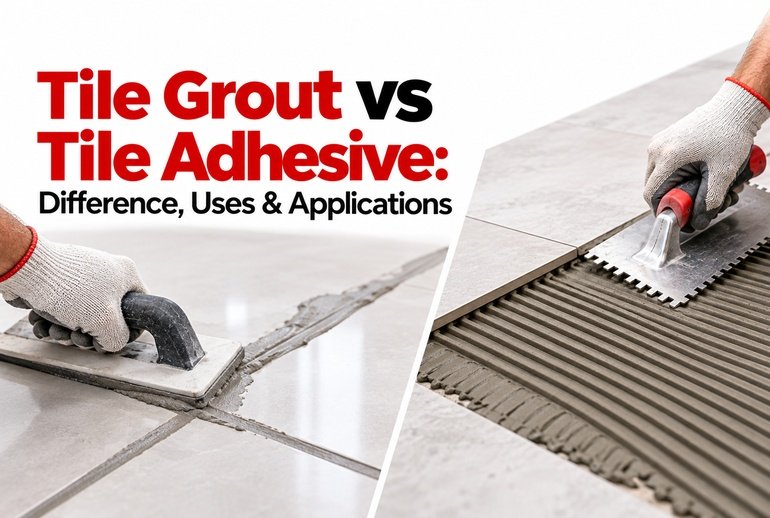
Tile Grout vs Tile Adhesive: Difference, Uses & Applications
When installing tiles, two materials are often used together but perform very different jobs: tile grout and tile adhesive. Understanding the difference between tile grout and tile adhesive helps you choose the right material for a durable, neat, and long-lasting tile installation. While tile adhesive is mainly responsible for fixing tiles firmly to a surface, grout fills the joints or gaps between tiles after installation. Using the wrong product for either purpose can lead to loose tiles, cracked joints, water seepage, or an untidy finish. In this guide, we will explain tile grout vs tile adhesive, their uses, applications, key differences, and how to select the right product for your project.
What Is Tile Adhesive?
Tile adhesive is a specially formulated bonding material used to fix tiles to surfaces such as concrete, cement plaster, floors, walls, and other suitable substrates. It creates a strong bond between the tile and the base, helping prevent movement or detachment.
Tile adhesive is commonly available in cement-based and polymer-modified formulations. The appropriate type depends on the tile material, application area, surface condition, and environmental exposure.
Common Uses of Tile Adhesive
Tile adhesive is used for:
- Fixing ceramic and porcelain tiles
- Installing wall and floor tiles
- Large-format tile installation
- Renovation projects
- Indoor and selected outdoor applications
- Areas exposed to moisture when a suitable adhesive is selected
What Is Tile Grout?
Tile grout is a material used to fill the joints between installed tiles. It seals the spaces between tiles, improves the appearance of the tiled surface, and helps protect joints from the accumulation of dirt and moisture.
Unlike adhesive, grout does not primarily hold the tile to the substrate. It is applied after the tiles have been properly fixed and the adhesive has sufficiently set.
Common Uses of Tile Grout
Tile grout is generally used for:
- Filling tile joints
- Finishing bathroom and kitchen tiles
- Sealing joints in floors and walls
- Improving the overall appearance of tiled surfaces
- Protecting joints against moisture and dirt
- Creating a uniform finish between tiles
Tile Grout vs Tile Adhesive: Key Differences
The easiest way to understand tile grout vs tile adhesive is to compare their purpose and placement.
Feature | Tile Adhesive | Tile Grout |
Main purpose | Bonds tiles to the substrate | Fills gaps between tiles |
Application | Beneath or behind tiles | Between installed tiles |
Primary function | Provides tile adhesion | Provides joint filling and finishing |
Used before/after tiling | Before and during tile fixing | After tile installation |
Appearance | Usually hidden under tiles | Visible between tiles |
Main concern | Bond strength | Joint durability and finish |
Both products are important, but they should not be considered interchangeable.
Tile Adhesive Uses and Applications
Choosing the right adhesive is important because different tiles and surfaces can have different bonding requirements. For example, a large porcelain tile may require an adhesive with better bonding performance than a small ceramic wall tile.
Tile adhesives can be used in:
Residential Projects
They are widely used for kitchens, bathrooms, living rooms, balconies, and other tiled areas in homes.
Commercial Spaces
Offices, shops, hotels, restaurants, and other commercial buildings use tile adhesives for wall and floor installations.
Renovation Work
Modern adhesives can be useful when replacing old tiles or working with suitable existing surfaces, provided the substrate is properly prepared.
Tile Grout Uses and Applications
Grout is selected according to the joint size, exposure conditions, and desired finish. Bathroom and kitchen installations may require grout with appropriate resistance to moisture and staining.
It is commonly applied in:
- Bathrooms and shower areas
- Kitchen walls and floors
- Living spaces
- Commercial buildings
- Decorative tile installations
- High-traffic tiled floors
Can Tile Adhesive Be Used Instead of Grout?
No. Tile adhesive and grout are designed for different functions. Adhesive is formulated to bond tiles to the substrate, while grout is designed to fill the joints between tiles.
Using adhesive as grout may result in an unsuitable finish and may not provide the joint performance expected from a proper grout. Similarly, grout should not be used as a substitute for tile adhesive because it is not designed to provide the same bonding function.
How to Choose the Right Product?
Consider these factors before purchasing:
- Tile type: Ceramic, porcelain, natural stone, and large-format tiles may have different requirements.
- Surface: Check whether the installation is on concrete, cement-based surfaces, or another suitable substrate.
- Location: Bathrooms, kitchens, balconies, and outdoor areas can require products suited to their exposure.
- Joint width: Select grout according to the recommended joint size.
- Project conditions: Consider moisture, traffic, temperature, and expected use.
Conclusion
The difference between tile grout vs tile adhesive comes down to their basic function. Tile adhesive fixes tiles securely to the substrate, whereas tile grout fills the joints between tiles and provides a finished, protected surface. Both are essential parts of a proper tiling system, but neither should be used as a replacement for the other. Selecting the right product based on tile type, surface, location, and application requirements can help achieve a stronger and cleaner installation. For dependable tile installation solutions, explore the range offered by Rock Build.
Frequently Asked Questions
1. Is tile adhesive the same as tile grout?
No. Tile adhesive bonds tiles to the substrate, while grout fills the spaces between tiles after installation. They perform different functions.
2. Can I use tile adhesive to fill tile gaps?
Tile adhesive should not normally be used as a replacement for grout. Use a suitable grout designed for the joint size and application.
3. Which comes first, tile adhesive or grout?
Tile adhesive is applied first to fix the tiles. After the adhesive has set as recommended, grout is applied to the joints.
4. Is grout necessary after tile installation?
In most conventional tiled installations, grout is used to fill the joints and provide a finished surface. The appropriate grout depends on the project.
5. Can tile grout hold tiles in place?
Grout is not designed to provide the primary bond between tiles and the substrate. A suitable tile adhesive should be used for fixing.