
- By admin-theme
- Uncategorized
- 0 Comment
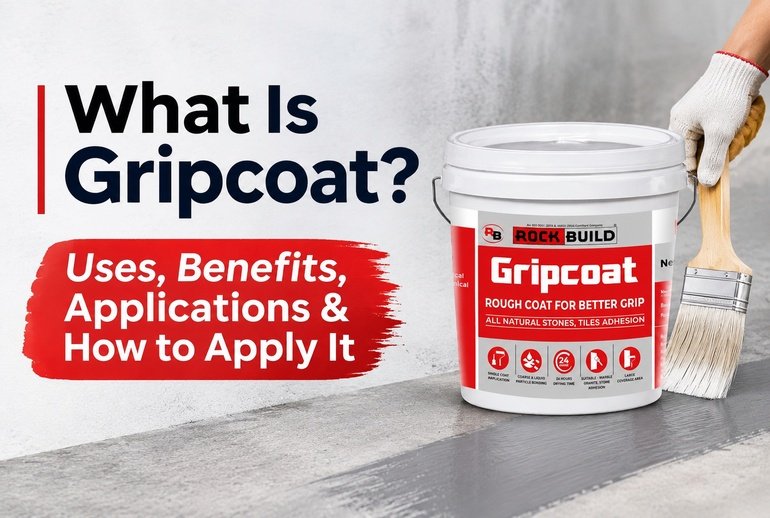
What Is Gripcoat? Uses, Benefits, Applications & How to Apply It
Gripcoat is a bonding layer used to improve adhesion between an existing surface and a new coating, plaster, mortar, or other construction material. It is especially useful when working on smooth, dense, or low-porosity surfaces where ordinary materials may not bond properly. Understanding what is Gripcoat, where it is used, and how to apply it correctly can help improve the durability and finish of construction and renovation work.
In practical applications, Gripcoat creates a textured or adhesive surface that allows the next layer to hold firmly. It can be useful in repair work, plastering, tiling, waterproofing preparation, and other construction applications. Products such as Rock Build Gripcoat are designed to make surface preparation easier while supporting better bonding between different construction layers.
What Is Gripcoat?
Gripcoat is generally a bonding or adhesion-promoting coating applied before another construction material. It helps overcome the bonding challenges found on smooth concrete, masonry, plaster, and other surfaces.
Instead of allowing the new material to sit loosely over a smooth substrate, Gripcoat provides a suitable surface for mechanical and adhesive bonding. This can reduce problems such as peeling, debonding, and premature cracking when the product is selected and applied according to the manufacturer’s recommendations.
Uses of Gripcoat
Gripcoat has several practical uses in construction and renovation projects. Common applications include:
- Preparing smooth concrete surfaces before plastering
- Improving adhesion between old and new surfaces
- Providing a suitable base for subsequent coatings
- Supporting renovation and repair work
- Preparing surfaces before applying certain construction materials
- Improving bonding where the existing substrate has limited surface texture
For example, if plaster needs to be applied over a relatively smooth concrete surface, a suitable Gripcoat can help create a better bonding interface.
Benefits of Using Gripcoat
Using a bonding coat as part of surface preparation can offer several advantages.
1. Better Adhesion
The primary purpose of Gripcoat is to improve the bond between the substrate and the next layer. This is particularly valuable on surfaces where conventional plaster or mortar may have difficulty adhering.
2. Improved Surface Preparation
A properly prepared substrate is essential for long-lasting construction work. Gripcoat can help create a more suitable surface before applying the next material.
3. Useful for Renovation Projects
Old buildings often contain smooth, painted, dense, or otherwise difficult surfaces. A suitable bonding coat can make certain renovation applications more manageable.
4. Helps Reduce Bonding Problems
Poor adhesion can result in peeling, hollow patches, or detachment. Correct surface preparation with an appropriate Gripcoat can help minimize these risks.
5. Convenient Application
Depending on the formulation, Gripcoat can be applied using commonly used tools such as a brush, roller, or other recommended application equipment.
Gripcoat Applications in Construction
Gripcoat can be considered for several construction situations where improved adhesion is required.
Concrete and Masonry Surfaces
Smooth concrete and masonry substrates may require additional preparation before plaster or another coating is applied. Gripcoat can provide an intermediate bonding layer.
Plastering Work
In certain plastering applications, Gripcoat is used to improve the connection between the existing substrate and the plaster layer.
Repair and Renovation
During renovation, the new material often needs to bond with an older surface. Proper cleaning and a suitable bonding coat can help create a more reliable interface.
Interior and Exterior Construction
Depending on the specific product, Gripcoat may be suitable for interior or exterior applications. Always check the product’s technical specifications and recommended areas of use before application.
How to Apply Gripcoat Properly
Correct application is just as important as choosing the right product. A general application process includes the following steps:
- Clean the surface: Remove dust, dirt, loose particles, grease, oil, and other contaminants.
- Repair damaged areas: Fill major cracks, holes, or weak portions where required.
- Check the substrate: Ensure the surface is structurally sound and suitable for the intended application.
- Prepare the Gripcoat: Follow the manufacturer’s instructions for mixing or preparation.
- Apply evenly: Use the recommended tool to create a consistent coat over the required area.
- Allow it to set: Give the Gripcoat sufficient time to dry or develop the required bond before applying the next layer.
- Apply the subsequent material: Once the recommended waiting period is complete, proceed with plaster, mortar, coating, or other specified material.
Application conditions can vary according to the product, substrate, temperature, and intended use. Therefore, the manufacturer’s technical instructions should always take priority.
Important Precautions When Using Gripcoat
For better results, keep these points in mind:
- Do not apply it over loose or unstable surfaces.
- Remove contaminants before application.
- Avoid applying it outside the conditions specified by the manufacturer.
- Maintain the recommended coverage and thickness.
- Allow adequate drying or curing time.
- Do not add water or other materials unless specifically instructed.
- Follow the product’s technical data sheet for storage and application requirements.
Conclusion
Knowing what is Gripcoat helps explain why surface preparation matters in construction. It acts as an adhesion-promoting layer that can improve bonding between difficult substrates and subsequent materials. From concrete and plastering work to repairs and renovation, the right Gripcoat can support better surface performance when properly selected and applied.
For construction projects requiring a reliable bonding solution, explore Rock Build Gripcoat and follow the manufacturer’s application recommendations for the best results.
Frequently Asked Questions
1. What is Gripcoat used for?
Gripcoat is primarily used to improve adhesion between an existing substrate and a subsequent construction material such as plaster, mortar, or coating.
2. Can Gripcoat be applied on concrete?
Yes, suitable Gripcoat products can be used on certain concrete surfaces, particularly where the substrate is smooth and requires improved bonding.
3. How should a surface be prepared before Gripcoat application?
The surface should generally be clean, sound, and free from dust, grease, loose particles, and other contaminants.
4. Can Gripcoat replace surface cleaning?
No. Gripcoat is not a substitute for proper surface preparation. Cleaning and repairing the substrate are important before application.
5. How long should Gripcoat dry before plastering?
The required waiting time depends on the specific product and site conditions. Always follow the manufacturer’s technical instructions.