
- By admin-theme
- Cleaning Roof, Uncategorized
- 0 Comment
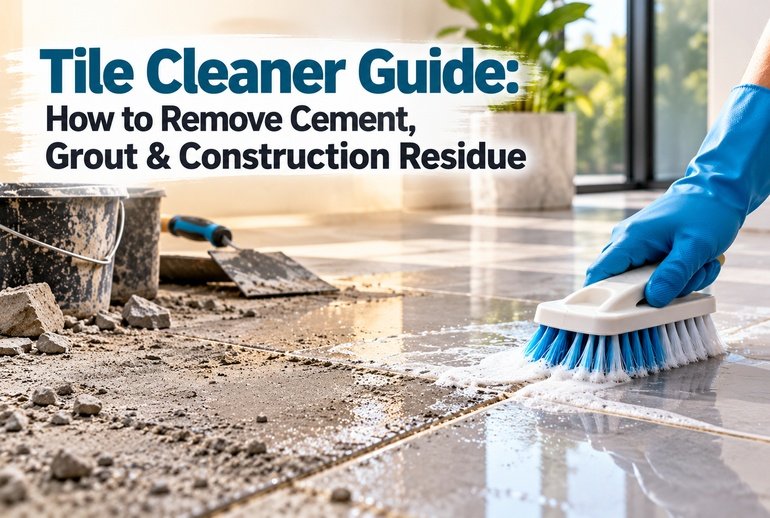
Tile Cleaner Guide: How to Remove Cement, Grout & Construction Residue
After tile installation, the final surface may look far from finished. Cement splashes, grout haze, mortar marks, dust and other construction residue can leave tiles looking dull and dirty. Regular floor cleaners often cannot handle these stubborn deposits, which is why choosing the right tile cleaner is important for post-construction cleaning.
The correct cleaning method depends on the type of residue and the tile surface. Ceramic and porcelain tiles can generally tolerate suitable cement-residue cleaners, while marble, limestone and other acid-sensitive surfaces require much greater care. Before applying any cleaning chemical, always read the product instructions and test it on a small, hidden area.
Why Do Tiles Get Cement and Grout Residue?
During construction or renovation, small amounts of cement, mortar and grout can remain on the tile surface. When these materials dry, they form a hard film that ordinary mopping may not remove.
Common post-installation residues include:
- Cement splashes and dried cement
- Grout haze or grout film
- Mortar deposits
- Construction dust and dirt
- Mineral or hard-water deposits
- Efflorescence or white salt-like deposits
Grout haze is particularly common when excess cement-based grout is not properly cleaned from the tile face after installation. Once it dries, removal becomes more difficult.
How to Choose the Right Tile Cleaner
The first step is to identify both the residue and the tile material. Using an unsuitable cleaner can dull the finish, damage grout or etch sensitive surfaces.
Residue | Suitable Approach |
Fresh cement | Water and gentle cleaning |
Light grout haze | Tile/grout haze cleaner |
Dried cement film | Suitable cement-residue remover |
Heavy construction residue | Heavy-duty tile cleaning solution |
Natural stone | Stone-specific, surface-safe cleaner |
Acid-based cleaners can be effective against cement-based residue, but they should only be used where the surface is compatible. Polished marble and other acid-sensitive materials should not be treated with unsuitable acidic products.
How to Remove Cement Residue from Tiles
1. Remove Loose Dirt First
Sweep or vacuum the area to remove loose dust, sand and construction particles. This prevents unnecessary scratching when the surface is scrubbed.
2. Pre-Wet the Surface
Lightly wet the tiles and grout joints before applying a suitable cleaner. Pre-wetting can help control absorption and reduce unnecessary contact with the grout.
3. Apply the Tile Cleaner
Apply the selected tile cleaner according to its label instructions. Do not assume that a stronger concentration will produce better results. Correct dilution and application time are important.
4. Allow the Cleaner to Work
Give the cleaning solution sufficient contact time to loosen the cement or grout residue. Avoid allowing the product to dry completely on the surface.
5. Scrub Gently
Use an appropriate nylon brush, scrub pad or other recommended tool. Avoid aggressive steel wool or metal tools, which can scratch or dull certain tile finishes.
6. Rinse Thoroughly
After the residue has loosened, rinse the surface thoroughly with clean water and remove the remaining slurry. Repeat the process if necessary rather than using excessive chemical strength.
How to Remove Dried Grout from Tiles
Dried grout can be particularly stubborn. If the residue is cement-based, a suitable grout haze remover or tile cleaning chemical may help loosen it. For small deposits, gentle mechanical removal using an appropriate plastic scraper can also be useful.
Avoid scraping aggressively with sharp metal objects. The aim is to remove the residue without damaging the tile glaze or finish.
For persistent grout haze, a purpose-designed cleaner is generally preferable to experimenting with household chemicals. Manufacturers of tile and grout systems also recommend testing cleaning methods on a small area before treating the entire surface.
Mistakes to Avoid During Post-Construction Tile Cleaning
A few shortcuts can create bigger cleaning problems later. Avoid:
- Using undiluted chemicals without checking instructions
- Applying acidic cleaners to marble or other acid-sensitive stone
- Scrubbing aggressively with metal tools
- Leaving cleaning chemicals on the surface longer than recommended
- Skipping a small-area compatibility test
- Mixing different cleaning chemicals
- Ignoring grout joints while cleaning the tile surface
The safest approach is to match the tile cleaner to the surface and residue rather than choosing the strongest product available.
Conclusion
Removing cement, grout and construction residue requires more than ordinary mopping. The right tile cleaner, suitable tools and correct application method can help remove stubborn deposits while protecting the tile surface. Always identify the residue, check the tile material, test the product first and follow the manufacturer’s instructions.
For dependable post-construction cleaning, choose a suitable tile cleaning solution from Rock Build and give your newly installed tiles the clean, finished appearance they deserve.
Frequently Asked Questions
1. What is the best tile cleaner for cement residue?
The best cleaner depends on the tile material and type of cement residue. A purpose-designed cement and grout residue cleaner is generally more suitable than a regular household floor cleaner.
2. Can tile cleaner remove dried grout?
Yes, a suitable tile cleaner can help remove cement-based grout haze and residue. Heavily dried deposits may require repeated treatment or gentle mechanical cleaning.
3. Can I use an acidic tile cleaner on marble?
Generally, acidic cleaners should not be used on polished marble or other acid-sensitive surfaces because they can cause etching or surface damage. Always check product compatibility first.
4. How do I remove cement stains from tiles?
Remove loose dirt, wet the surface, apply a suitable cement-residue cleaner as directed, allow the recommended contact time, scrub gently and rinse thoroughly.
5. Can steel scrubbers be used to remove cement from tiles?
It is better to avoid aggressive metal scrubbers because they may scratch or dull some tile surfaces. Use a suitable nylon pad, brush or plastic scraper where recommended.