
- By admin-theme
- Uncategorized
- 0 Comment
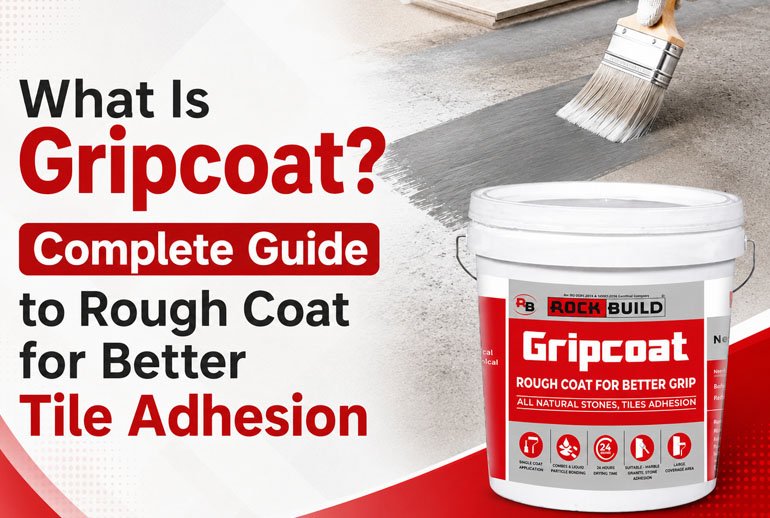
What Is Gripcoat? Complete Guide to Rough Coat for Better Tile Adhesion
The modern construction uses a lot of tiles, as they are strong and easy to maintain and are also attractive. Nevertheless, the tiles will only work effectively when placed on well prepared surface. A rough coat or Gripcoat is one of the significant preparation steps that are significant. This coating enhances the texture of the surface and increases the bonding of the tile adhesive to the surface.
This guide details the definition of gripcoat, the purpose of using it and the benefits it offers in the installation of tiles.
What Is Gripcoat?
Gripcoat is a rough glazing that has been prepared and applied to the smoothed surfaces in advance of fixing tiles. It is typically composed of concrete composed of a blend of cement, sand, bonding agents and occasionally polymer additives. The primary reason for using this coat is to provide a textured base on which the tile adhesive can stick.
A large number of construction surfaces are very smooth, such as concrete walls or beams. In situations where the tiles are applied to such a surface directly, the paste might not stick. The rough coating of tiles enhances the grip on the surface and prevents tile detachment in future.
What Is the Purpose of a Rough Coat in the Installation of Tile?
The preparation of the surface is one of the most important parts of tile installation. The adhesive layer can also fail to bond well unless there is a rough base, particularly when applied on dense concrete or plastered surfaces.
The use of gripcoat is useful in a number of ways:
- It enhances the adhesion of the tiles because of the creation of a textured surface.
- It enhances the attachment between the tile adhesive and the substrate.
- It minimises the chances of hollow tiles or tile debonding.
- It increases the integrity in places that are subjected to water or temperature variation.
Based on construction analysts, one of the most prevalent causes of tile failures in buildings is poor surface preparation of the surface. An appropriate cement rough coating can be of great help in enhancing the reliability of installation.
In Which Locations Does Gripcoat Have Common Uses?
Gripcoat is usually used when the surface is too smooth to be tiled directly. There are some common applications that are:
- Concrete walls and beams
- RCC structures
- Bathroom and kitchen walls
- Prior to cladding tiles, exterior walls.
- The renovation projects in which the old surfaces require more bonding.
Under such circumstances, the surface ready to be tiled is vital in order to make the adhesive layer work efficiently.
How Gripcoat Is Applied
The application of gripcoat is an easy process that needs the right technique.
The surface has to be cleaned first to eliminate dust, grease or loose particles. Then the coarse coat mixture is made with cement and sand with bonding agents. The paste is spread all over the surface to form a coarse surface. Once applied, the coating is left to dry accordingly, then tile adhesive is applied.
Conclusion
Gripcoat is also significant in long term tile installations. It also increases the adhesion of the tiles, minimizes the cases of failures in installation and increases the overall durability of tiled surfaces by establishing a rough and stable base. Correct preparation of a surface to be tiled is thus one of the steps that cannot be ignored in any construction or renovation work.
Firms like Rockbuild work towards the establishment of construction materials which help in facilitating the choice of reliable tile installation systems and enhanced bonding work in the current building works.