
- By admin-theme
- Uncategorized
- 0 Comment
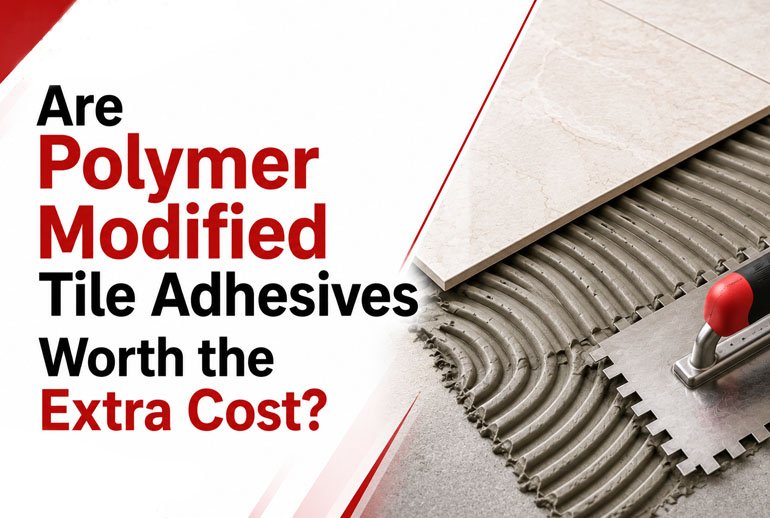
Are Polymer Modified Tile Adhesives Worth the Extra Cost?
Selecting the appropriate tile adhesive is a factor that has relevance to the stability and longevity of a tile installation. Although the use of cement based adhesives has been extensive over the years, polymer modified tile adhesives have become popular in the modern day building construction. A great number of house owners and builders usually ask themselves whether it is worth paying the extra price. Gaining insight into the functionality of these adhesives and their capabilities may make decisions on whether these adhesives are worth the money.
What are Polymer modified tile adhesives?
Polymer modified tile adhesives- Cement-type adhesives that are supplemented with special polymer additives. The polymers enhance the properties of the adhesive by enhancing flexibility, bonding strength and resistance to water.
Polymer modified adhesives form stronger chemical bonds between the tile and the substrate unlike the normal cement adhesives that make use of mechanical bonding as the primary attaching mechanism. This enhancement makes them suitable for high-performance applications such as large-format tiles, exterior walls, and areas prone to moisture.
Major Advantages of Polymer Modified Tile Adhesives
1. Stronger Bonding Strength
Polymer modified tile adhesive is one of the most preferred because it has a high bonding ability. Construction materials studies indicate that polymer additives have a higher tensile adhesion strength than conventional cement adhesives. This aids the tiles in keeping their position despite the heavy loads or movement.
2. Improved Flexibility
Temperature variations as well as the movement of structures, cause buildings to expand or contract naturally. These small movements can be allowed in flexible tile adhesive without cracks and tile detachment. This renders the polymer modified adhesives perfect for balancing and terraces and exterior surfaces.
3. Better Water Resistance
One of the causes of tile failure is moisture. Polymer modified adhesives have higher water penetration resistance, thus they can be used in bathrooms, kitchens, swimming pools and other wet places.
4. Modern Tiles Compatibility
Large format tiles, vitrified tiles, and porcelain tiles are finding more and more use in modern construction. The porosity of these tiles is low, and, therefore, the traditional adhesives might not bond very well. Polymer modified adhesives enhance grip and secure installation.
Should the Additional Cost Be Warranted?
Polymer modified tile adhesives can be more expensive than the simple cement adhesives but can be more economical in the long run. The increased strength minimizes the possibility of tile damage, repair and maintenance expenses.
They are especially prescribed in case of:
- Large format tiles
- Outdoor installations
- Wet rooms like bathroom and kitchen.
- Commercial high foot traffic areas.
- Surfaces subjected to changes in temperature.
Conclusion
Performance and durability are becoming a concern especially in modern construction. Polymer-modified tile adhesives will provide enhanced bonding, increased flexibility, and greater moisture resistance, making them a good choice in most tile installations. Although they are a little costly, they usually pay off in the long run.
To people interested in knowing about more advanced tile adhesive products and new-modern installation material, Rockbuild is oriented in the development of construction products aimed to help in carrying out a stronger and more durable tile installation in residential and commercial work.