
- By admin-theme
- Uncategorized
- 0 Comment
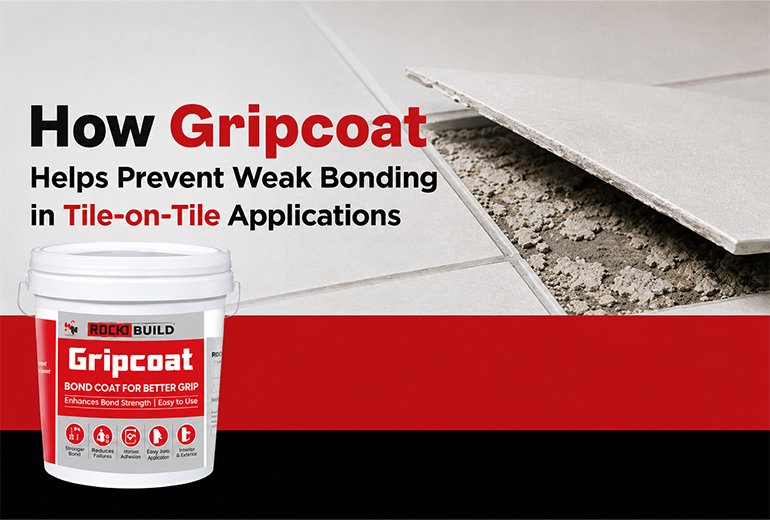
How Gripcoat Helps Prevent Weak Bonding in Tile-on-Tile Applications
Installing tiles on top of existing tiles has become trendy for renovation projects due to its time-saving, cost-effective nature and the avoidance of the hassle of removing old tiles. One of the most significant difficulties with tile-on-tile applications is insufficient bond. Typically, old tiles are not very sticky surfaces to adhere to, so the tile adhesive will not adhere well to the smooth surface. These can lead to loose tiles, hollow sounds, cracks, and possible failure of the tiles over time.
This is an issue that requires proper surface preparation. A bonding coat establishes the needed texture and traction to ensure the performance of tile adhesive.
Why does weak bonding occur?
In general, weak bonding is obtained when the adhesive is applied directly to smooth surfaces without any surface preparation. Current ceramic and vitrified tile, polished stone, or granite surfaces offer little mechanical holding power.
Some common causes of weak bonding include:
- Slippery, impervious, smooth surfaces
- Dust, grease, or contaminants
- Poor surface preparation
- Inadequate adhesive grip
- Movement or vibration in the substrate
Research in the construction sector has established the importance of surface preparation in the longevity of tile installations. A textured bonding layer provides great bond strength and helps avoid installation failures.
Why Gripcoat is the Answer to Better Tile Adhesion
For roughening surfaces before applying tile adhesive, Gripcoat is specially formulated. Adhesive is not allowed to come into contact with the smooth tile surface; instead, it is placed in an intermediate layer that provides a better mechanical bond between the tile and the adhesive.
Gripcoat, applied with a brush or a roller, creates a rough surface that enhances the adhesive contact. This extra texture makes bonding of the tile with the surface easier, leading to greater bond strength.
Key Benefits of Gripcoat
- Adds additional traction on slippery surfaces
- Enhances bonding of tile adhesive
- Improves the slip resistance of tiles
- The material can be used to connect tiles.
- Helps save time when renovating.
- Assists in achieving long-term installation results
- Ideal for walls, floors, kitchens and bathrooms.
Ideal Applications
Gripcoat is especially beneficial in places where bonding methods are not applicable. It is often found in:
- Re-tiling projects
- Existing tile surfaces
- Granite backside preparation
- Smooth concrete substrates
- Commercial renovation projects
- Balconies and wet areas
It is useful for modern building and refurbishment projects as it enhances bonding on non-absorbent surfaces.
Application Process
The surface should be completely cleaned before use for best results. Dusting, greasing, and free particles should be removed. Gripcoat can then be applied evenly with a brush or roller and dried according to instructions. Once dry, the tile adhesive can be used to firmly attach the tile.
Conclusion
The key to successful tile-on-tile installation is proper surface preparation. Gripcoat provides a textured bonding layer to reduce weak-bond issues and improve tile bonding. In cases where tiles need to be replaced without removing the existing tiles, such as during renovation, solutions like GRIPCOAT from Rock Build offer a reliable way to achieve stronger, longer-lasting tile installations.
FAQs
1. What is Gripcoat used for?
Gripcoat is a bonding coat applied before tile adhesive. It creates a rough surface that improves adhesion on smooth, old, or low-absorption substrates, especially in tile-on-tile projects.
2. Can Gripcoat be applied over existing tiles?
Yes. Gripcoat is specifically designed for tile-on-tile applications and helps improve adhesive grip on existing tile surfaces without the need for tile removal.
3. Does Gripcoat reduce tile slipping?
Yes. The textured surface created by Gripcoat improves adhesive contact, helping reduce tile movement and slipping during installation.
4. Where can Gripcoat be used?
Gripcoat can be used on floors, walls, bathrooms, kitchens, balconies, commercial spaces, and renovation projects that require stronger tile adhesion.
5. Is surface cleaning necessary before applying Gripcoat?
Yes. Proper cleaning is essential. Dust, grease, and loose particles should be removed to ensure the bonding coat adheres properly and delivers the best performance.