
- By admin-theme
- Uncategorized
- 0 Comment
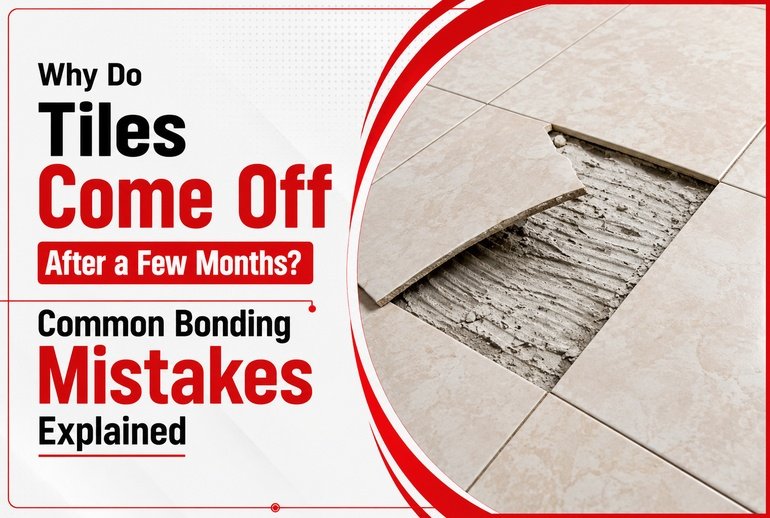
Why Do Tiles Come Off After a Few Months? Common Bonding Mistakes Explained
Tiles are supposed to last for a long time, but there’s a common issue among homeowners and contractors: broken or fallen tiles within a few months of installation. The problem is usually not the tile itself but rather a lack of adhesion caused by improper bonding during installation. Learning from these errors can help to create a long-lasting, durable tiled surface.
Poor Surface Preparation
Poor surface preparation is one of the most common causes of tile failure. The surface can be covered with dust, grease, paint residue, or surface moisture, which can impede proper bonding of the tile. The substrate should be structurally sound, clean, and dry before applying the tile adhesive. The surface must be adequately prepared to ensure high-quality adhesion.
Apply Adhesive to low or smooth surfaces
The modern building can have various surfaces, such as polished concrete, existing tiles, granite backsplashes, or other low-absorption surfaces. These surfaces give little adhesion for the glue. This causes poor tile adhesion, which can lead to tile loss over time.
A bonding coat can significantly improve the adhesive’s bond to the substrate. The surface texture provides a stronger mechanical bond and minimises breaks.
Incorrect Adhesive Application
Another common error is applying the tile adhesive unevenly. Under-tiling will cause a hollow spot beneath the tile if the adhesive has not been applied correctly with the recommended notched trowel. The voids create weak sections that may lead to cracking, movement, and eventual separation of the tiles.
Professional installers advise using full adhesive coverage to ensure strong, reliable bonding of tiles, particularly with large-format tiles.
Ignoring Re-Tiling Requirements
Many renovation jobs involve tile-on-tile fixing. This approach saves on demolition costs and time, but it must be carefully planned. Old tiles are typically smooth and non-porous, so it is risky to apply the adhesive directly. If there is no appropriate bonding layer, the new tiles may not stick.
To ensure the long-term performance of re-tiling work, it is important to have a textured surface before applying adhesive.
Role of Bonding Coat
A bonding coat is specially formulated to provide a roughened surface that enhances tile bonding to difficult substrates. GRIPCOAT is a rough coat or bonding coat that is applied before the adhesive on difficult surfaces like tile-on-tile, old tile, granite backside, smooth concrete, re-tiling projects or other low-absorption surfaces. It enhances surface adhesion, prevents tiles from peeling off after installation and creates a better bond between the surface and the tile.
Conclusion
There is a great deal that can be done to prevent most tile failures. The right surface preparation, adhesive application, and bonding solutions can significantly enhance the durability of tile bonding and installation. These details during the installation process help to keep tiles in place and beautiful for many years.
Rock Build’s solutions are designed for construction professionals who want to optimise tile bonding and performance to achieve long-lasting tiled surfaces.
FAQs
1. Why do tiles fall off after installation?
Tiles usually fall off because of poor surface preparation, inadequate adhesive coverage, moisture issues, or weak tile bonding on smooth surfaces.
2. What is tile adhesion?
Tile adhesion refers to the strength of the bond between the tile, adhesive, and substrate. Good adhesion helps tiles stay firmly attached for years.
3. Can tiles be installed over existing tiles?
Yes, tile-on-tile installation is possible, but proper surface preparation and a suitable bonding coat are necessary for strong adhesion.
4. Why are smooth surfaces difficult for tile fixing?
Smooth surfaces provide limited grip for adhesives. Without a textured layer, the adhesive may not bond effectively, increasing the risk of tile failure.
5. What is the purpose of a bonding coat?
A bonding coat creates a rough and textured surface that improves adhesive grip and enhances tile bonding on challenging substrates.